The Panasonic Shiodome Museum of Art is hosting the exhibition "Beautiful Utopia: Portraits of Modern Japan Who Dreamed of an Ideal Land" from Thursday, January 15, 2026 to Sunday, March 22, 2026.
"Utopia" is a word coined from the title of a book by the 16th century English thinker Thomas More, and means "a place that does not exist anywhere."
Starting with More, utopian literature developed, depicting an ideal society that criticizes and examines the irrationality and problems of real life. In the 19th century, William Morris, a British social activist who led the Arts and Crafts movement, dreamed of an ideal society that integrates life and art in his book "Letters from Utopia." When this idea was introduced to Japan in the 20th century, utopia spread in the form of an "ideal way of life," leading to the search for communities that connect a wide range of genres, including art, crafts, and architecture.
This exhibition traces the image of 20th-century Japanese utopia, which sought a beautiful lifestyle amid rapid modernization, through approximately 170 artworks and documents, including paintings, architectural drawings, and crafts. In today's chaotic world, the exhibition explores ways to reimagine what a utopia of the future might look like.
*Some exhibits will be changed during the exhibition period. First period: January 15th to February 17th, Second period: February 19th to March 22nd
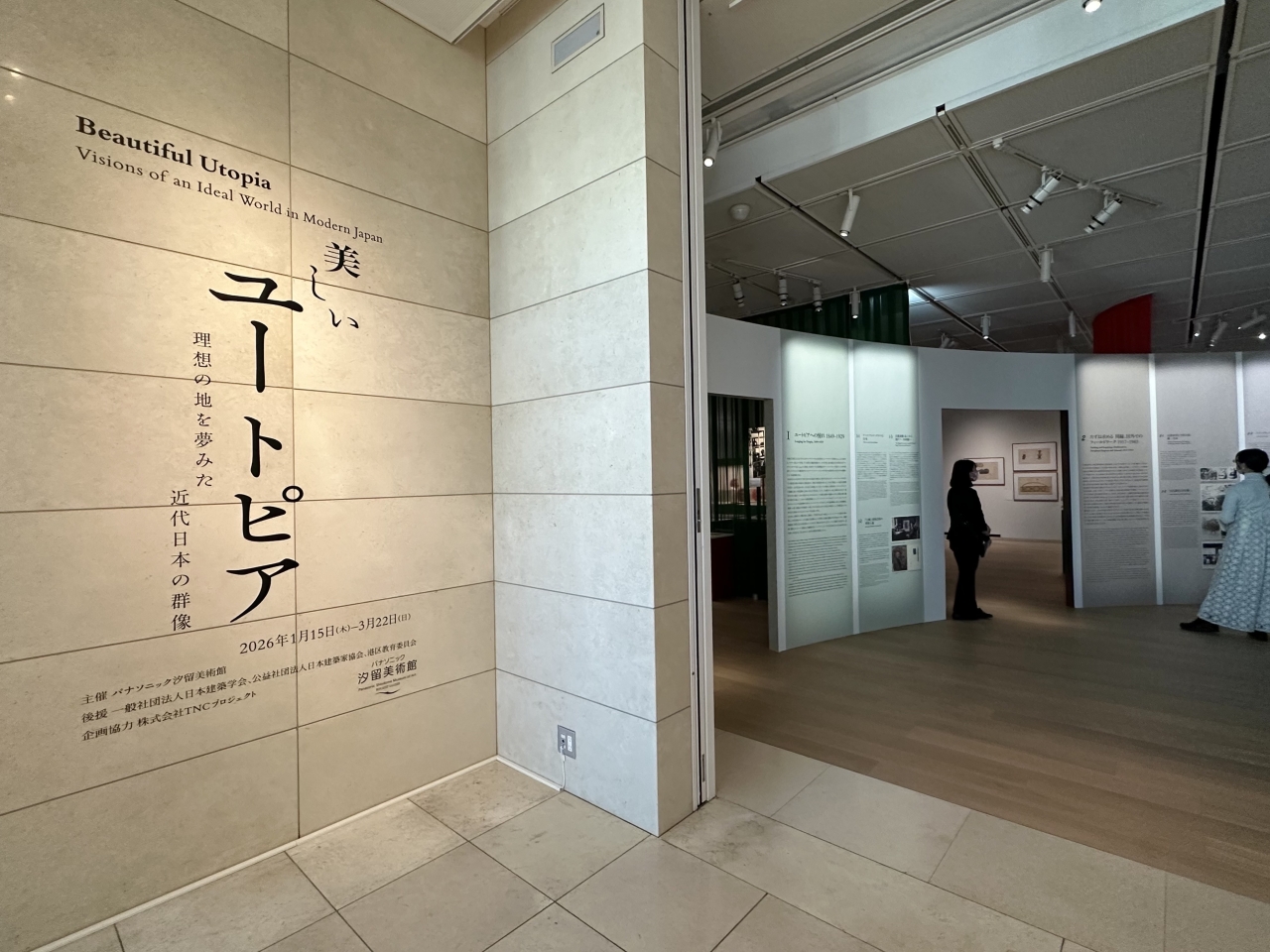
Venue entrance
The venue was designed by the architectural collective GROUP, which garnered attention as the designer of the public spaces at the Osaka-Kansai Expo. The concept of Chapters 1 to 5 is a "Utopia Observatory," a device for observing the different utopias.
Chapter 1, "Longing for Utopia," introduces the trend of idealism in Japan in the early 20th century, influenced by John Ruskin and William Morris. A first edition of Morris's "Letters from Utopia" is on display here. Published by the Kelmscott Press, a publishing company founded by Morris with the aim of creating the most beautiful books in the world, the book features a gorgeous woodblock print depicting Morris's beloved villa, Kelmscott Manor.
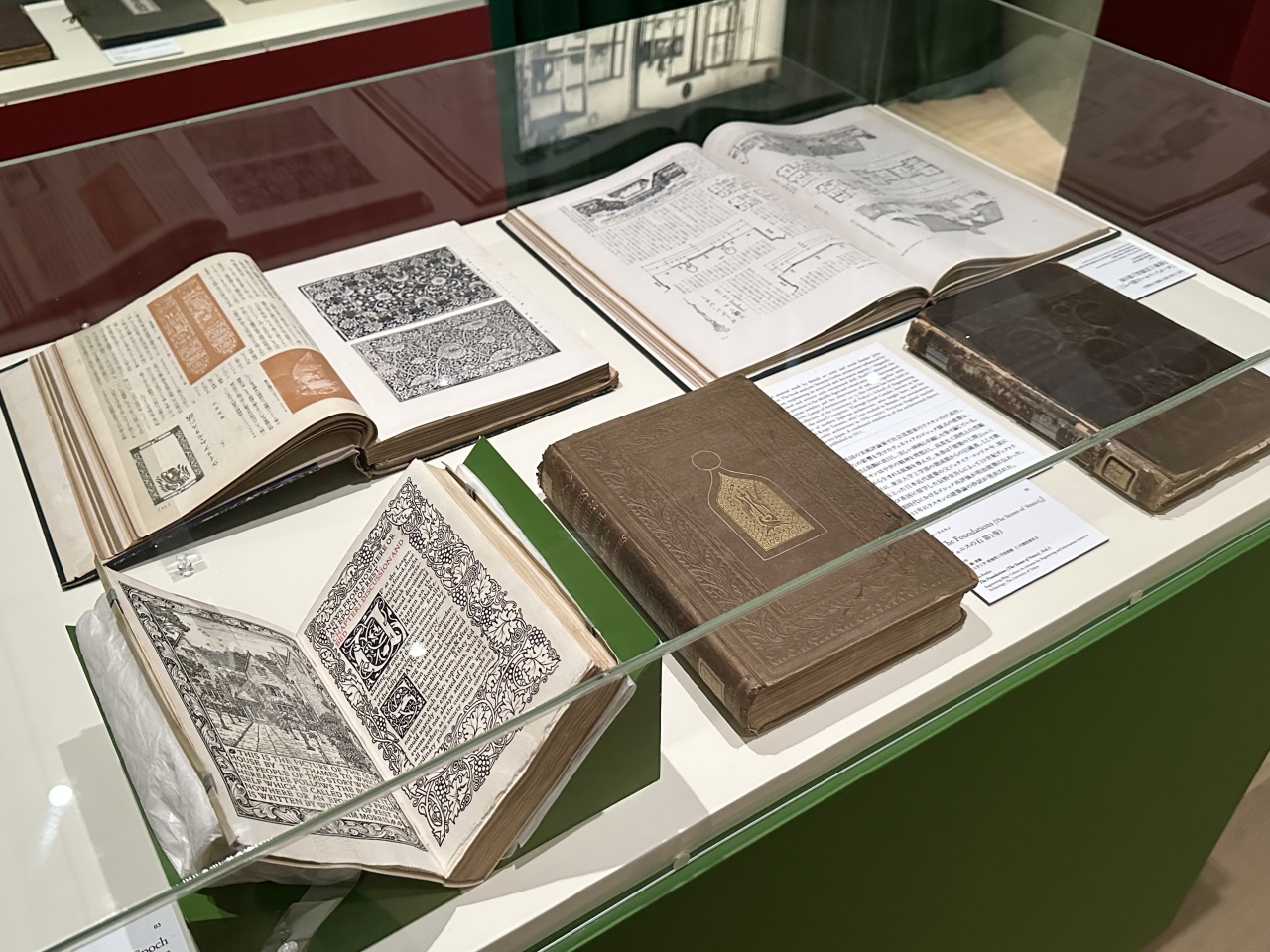
From the exhibition scene in Chapter 1, in the lower left is William Morris (published by Kelmscott Press) "News From Nowhere: or, An Epoch of Rest Being Some Chapters from a Utopian Romance" (Utopia News), 1892, TOPPAN Holdings Co., Ltd. Printing Museum Collection
Among Japanese intellectuals and artists, there were those who admired Western art and thought, and respected individuality and freedom, while at the same time attempting to reexamine their own roots and Eastern spirituality. The literary and artistic coterie magazine Shirakaba, founded primarily by students at Gakushuin University, was a symbolic example of this movement, and Yanagi Muneyoshi, a member of Shirakaba, was enthralled by traditional handicrafts during a trip to visit a wooden Buddha statue in the late Edo period. He led the "Mingei" (folk art) movement, which sought to find beauty in the lives of the common people. Around the time of the Taisho Democracy in Japan, "people" (min) became a key word.
The following chapter, "Seeking and Seeking: Fieldwork on the Periphery and Abroad," introduces fieldwork related to "the people," including research on folk houses and folk implements, which looked at the modernization taking place right at the author's feet. The interactions he undertook in farming, mountain, and fishing villages, surrounding areas, and ethnic groups transcended genres and borders to record the disappearing "people" and played a role in connecting them to the future.
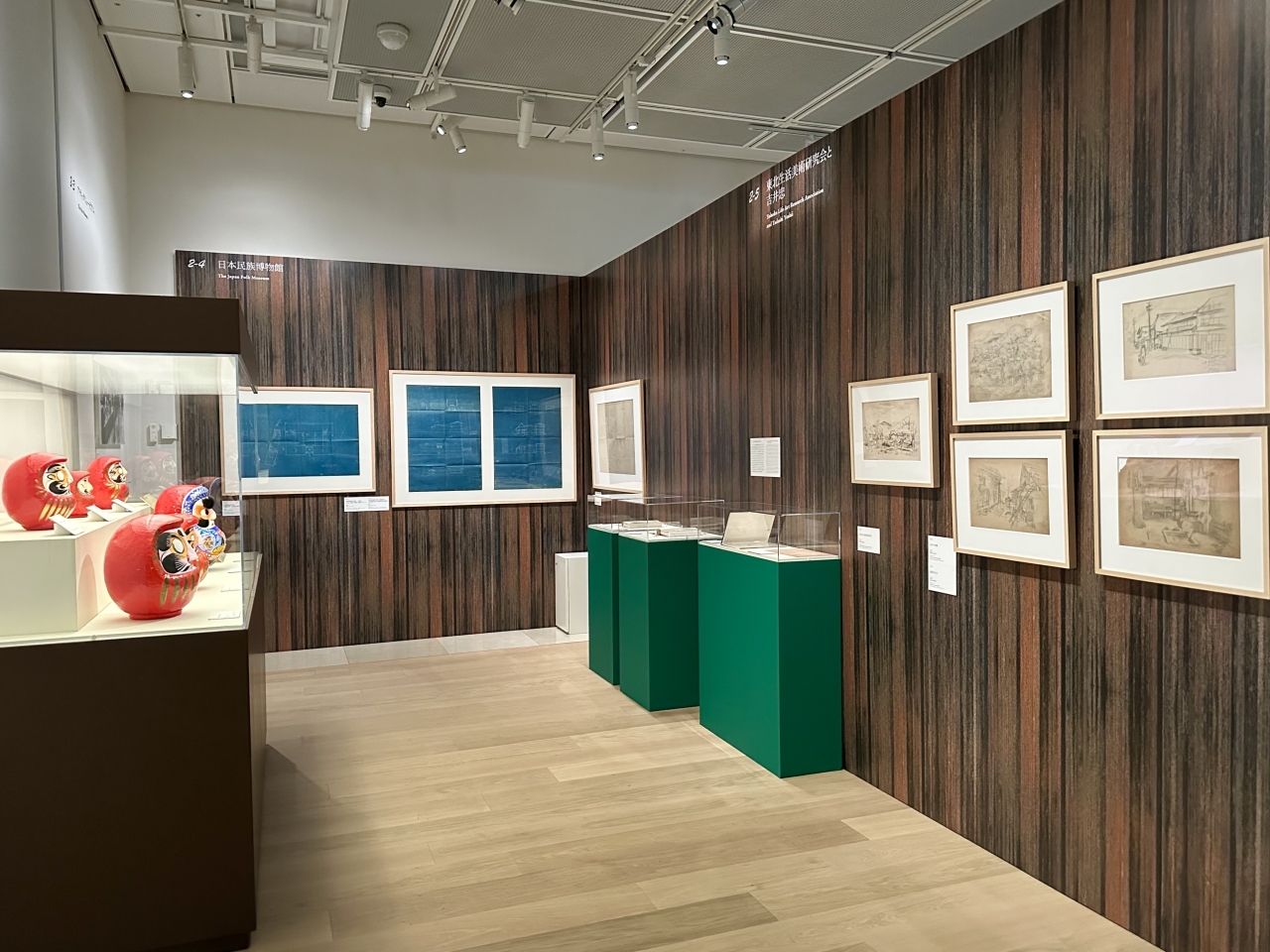
Chapter 2: Exhibition view
Keizo Shibusawa, a business leader and researcher and grandson of Eiichi Shibusawa, established his private museum, the Attic Museum, in the attic of his own home. It became a gathering place for researchers of ethnology and folklore, initially focusing on local toys such as Daruma dolls, but eventually expanding its scope to include folk implements in general and even the lifestyles of people on the Korean Peninsula and Taiwan. Even as many researchers joined, Shibusawa continued to support salaries, research expenses, and publication costs with his own funds. Shibusawa's ideal was collaborative research with like-minded individuals and "harmonious teamwork development." The talent and methodologies cultivated through Attic's activities later became the foundation for cultural heritage preservation in the postwar era.
The exhibition introduces materials related to the Attic Museum, as well as drawings by Kon Wajiro and Kurata Chikatada of the Japanese Folklore Museum plan, which was never realized due to the state of the war.
Chapter 3, "Dreaming of Urban and Suburban Communities," examines the dreams of architects, poets, and artists for art colonies and suburban ateliers after the Great Kanto Earthquake.
In the 1920s in Japan, against the backdrop of the development of the railway network and the housing and living difficulties in urban areas, cultural housing for city dwellers developed in suburban rural areas. Kurata Chikatada, one of the architects who introduced Western modernist architecture to Japan, also aimed to create a rural utopia modeled after Morris, and designed modern, comfortable communities for writers and artists in emerging suburbs such as Setagaya and Suginami, and he himself lived in these areas.
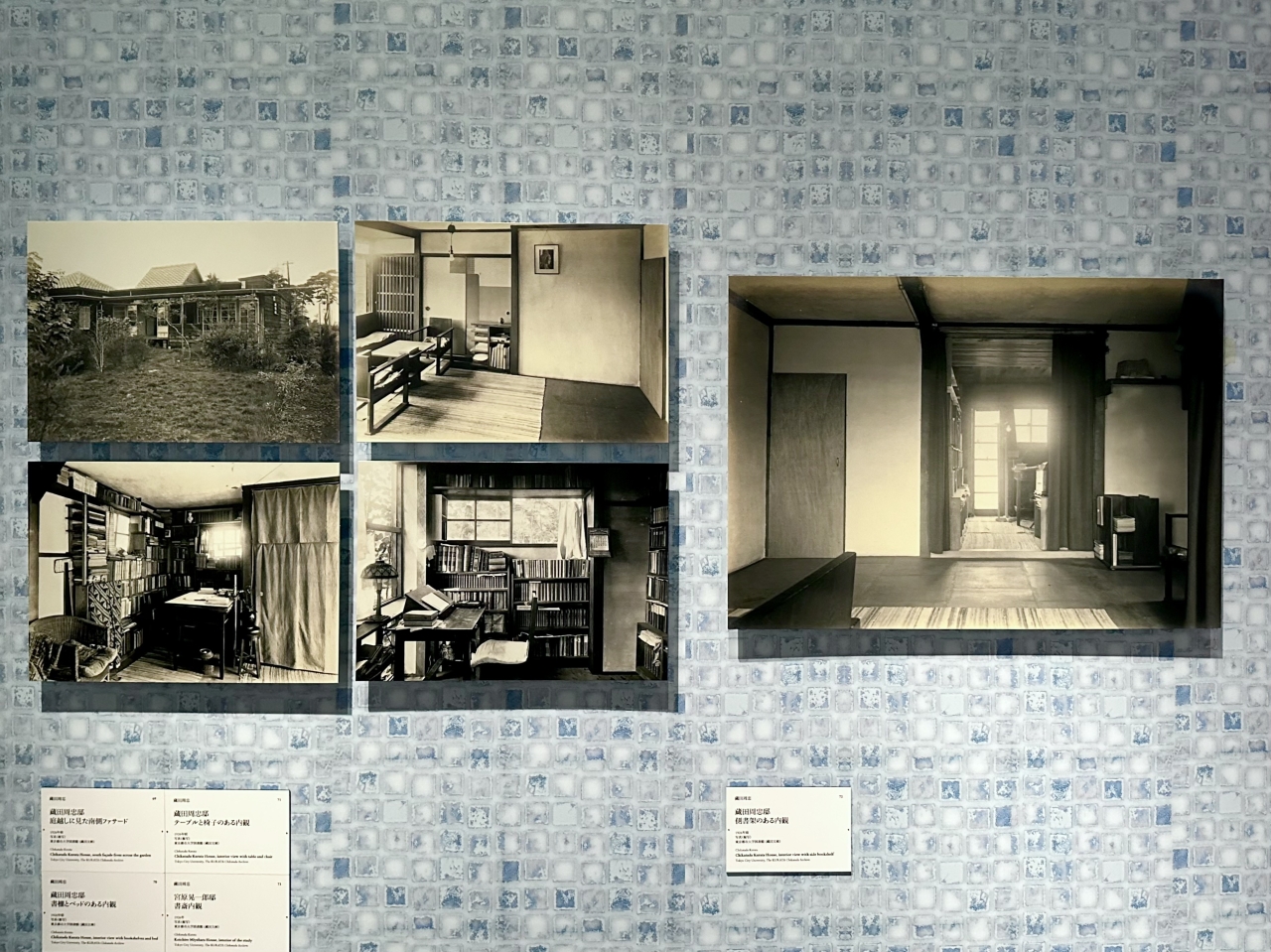
Chapter 3: Exhibition view of architectural materials by Kurata Chikata
Among these is Seibo Shoya, built in 1926 for historian Mori Senzo, a pioneering experimental house that attempted to establish an intellectual lifestyle in a minimal space of just 7.5 square meters. The venue also features a corner where visitors can wear a headset and experience a mixed reality (MR) reproduction of the interior of the house, based on drawings published in Kenchiku Gaho magazine at the time. (Date and time may be specified.)
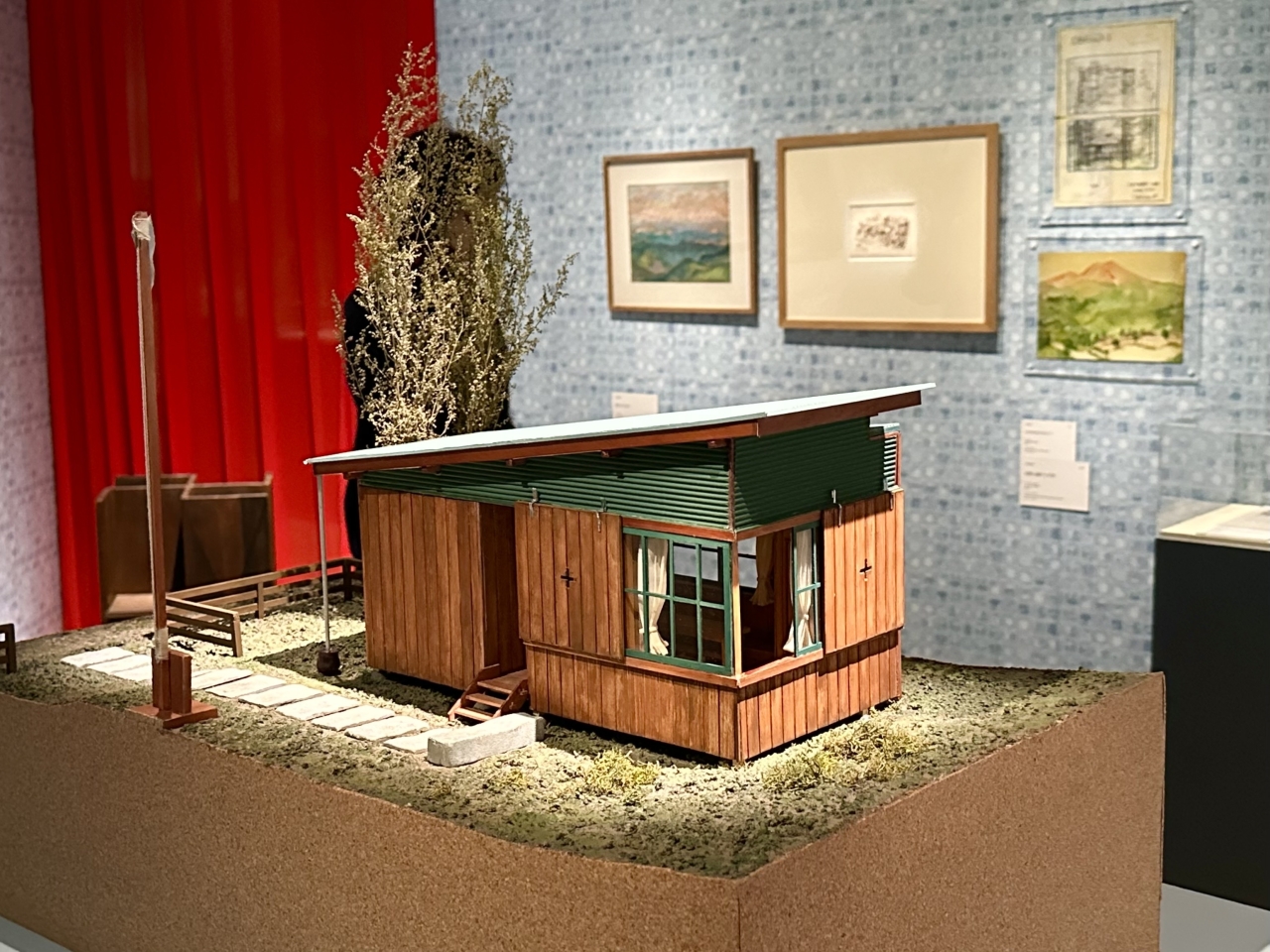
Meanwhile, Michizo Tachihara, a poet and architect who was highly anticipated but died young, sought a creative environment close to nature and envisioned his ideal small villa, "Hyacinth House," on the shores of Lake Bessho in Urawa. Though it was only a one-room apartment measuring just 16.5 m², it was a poetic studio cleverly divided into areas for conversation, writing, and sleeping. While it was not realized during Tachihara's lifetime, volunteers built it in Bessho Numa Park in 2004. At the exhibition, a 1/20 scale replica model of the original planned construction site is on display along with sketches.
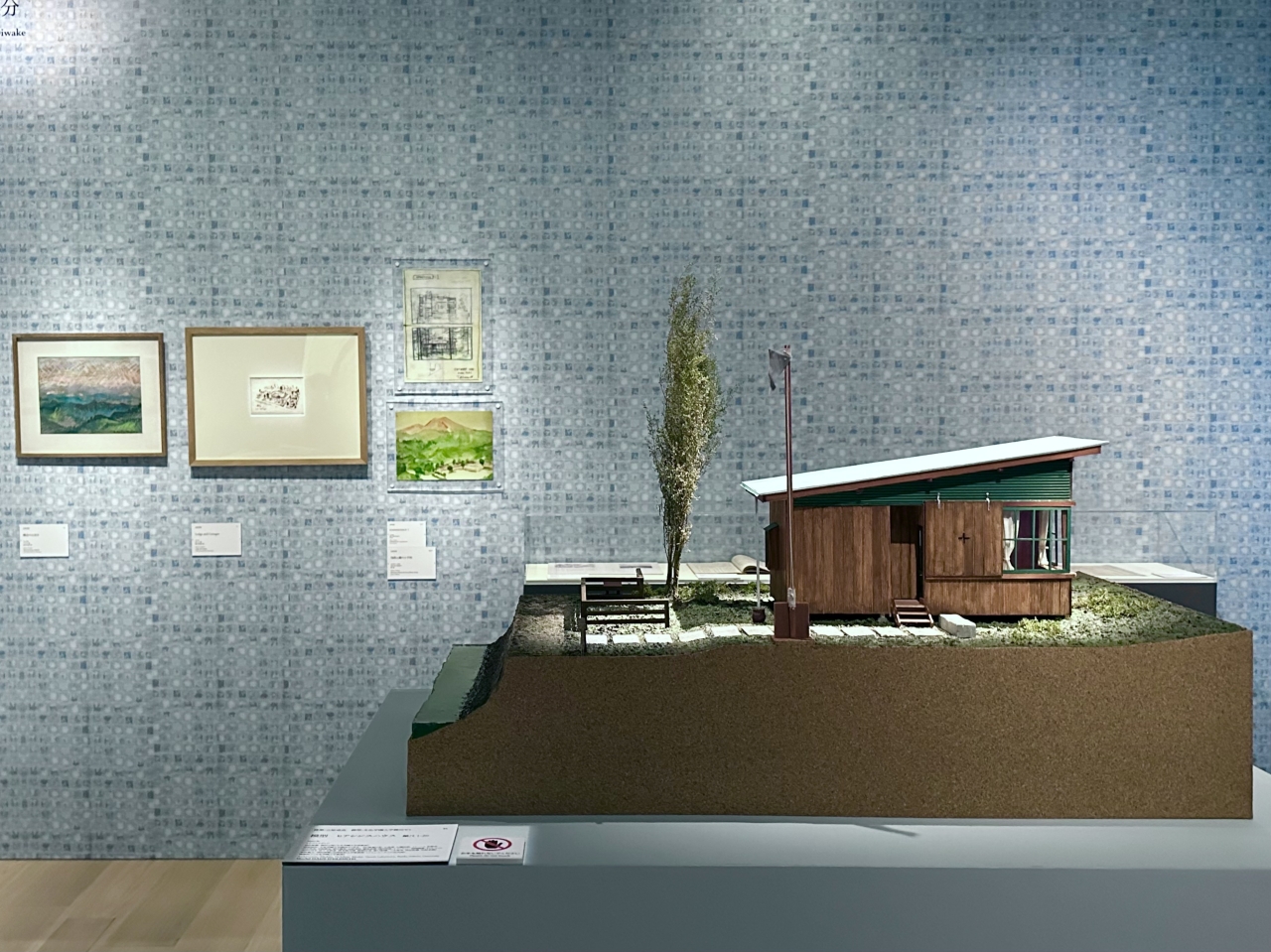
From Chapter 3, the exhibition view, on the right is architecture: Michizo Tachihara, model: Taneda Seminar, Bunka Gakuen University "Model Hyacinth House" 2025
Meanwhile, many painters who admired Parisian art used the studio village of Ikebukuro Montparnasse as their base of operations for living and creating. Ayumitsu, Aso Saburo, Tsuruoka Masao, Terada Masaaki, and Matsumoto Shunsuke maintained an independent approach to their work, even amidst the increasingly uncertain times as the shadow of war grew ever darker. Through continued interaction, they formed the Shinjingakai (New Artists Association). Though the association itself was short-lived, their conscientious approach, which, even in wartime, sought to "do what is natural for a human being" (Tsuruoka) and "make the minimum amount of self-assertion" (Aso), was later recognized as the "starting point of postwar art."
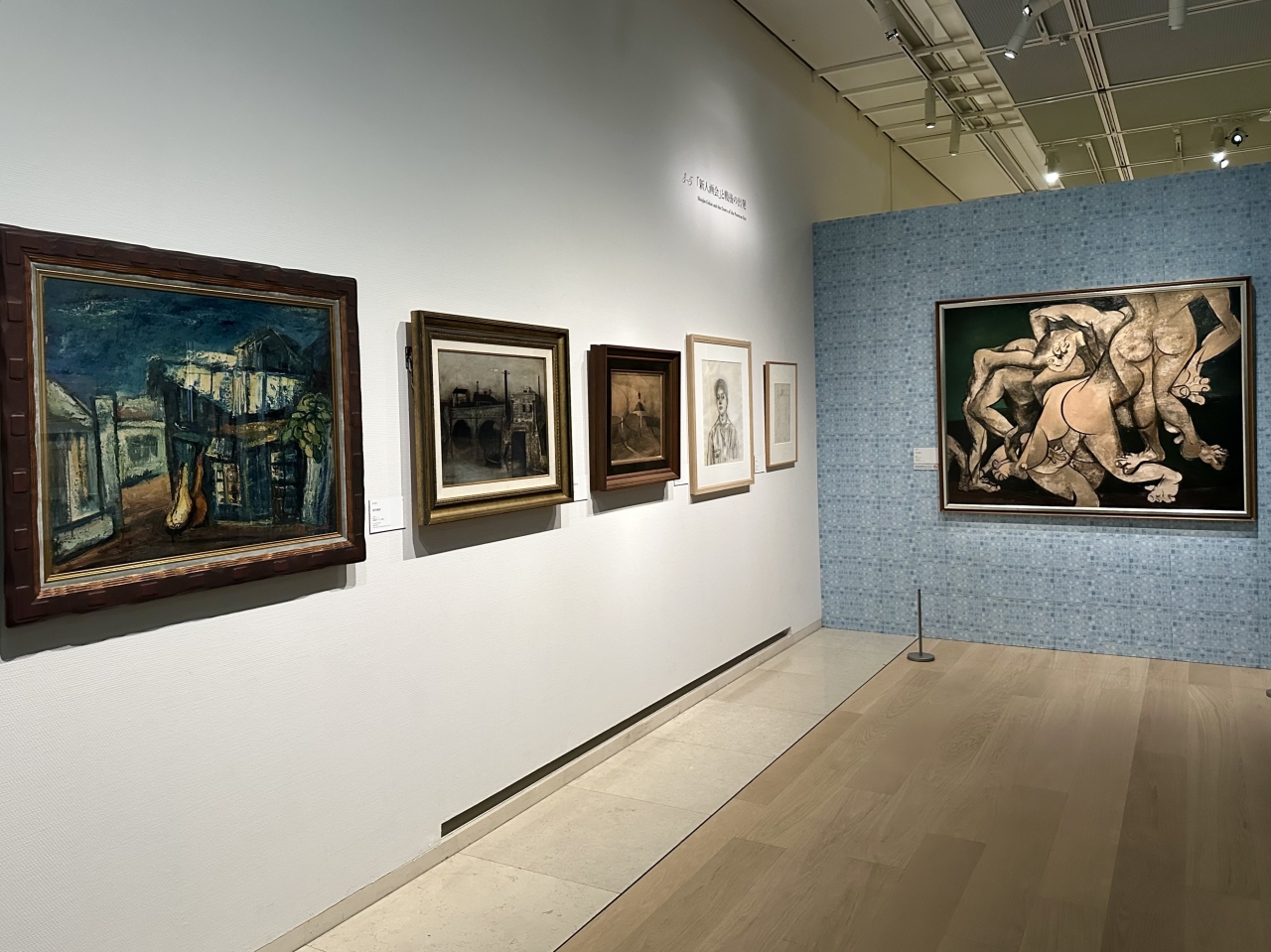
From the exhibition scene in Chapter 3, on the right is Masao Tsuruoka's "Night Group" 1949, Gunma Museum of Modern Art
Masao Tsuruoka's "Group of People at Night" (1949) is a work that Tsuruoka painted on a panel that had been primed by Matsumoto, who died young. The surrealist style of the work is reminiscent of Picasso's "Guernica," and the figures of naked people trampling on each other, entangled, and struggling to escape convey the energy of humanity as they bravely try to survive the chaos of the post-war period.
Chapter 4, "Experiments in Each Artist's Hometown," introduces the practices that artists such as Yamamoto Kanae, Miyazawa Kenji, Takehisa Yumeji, and Bruno Taut attempted in their hometowns or "dreamlands."
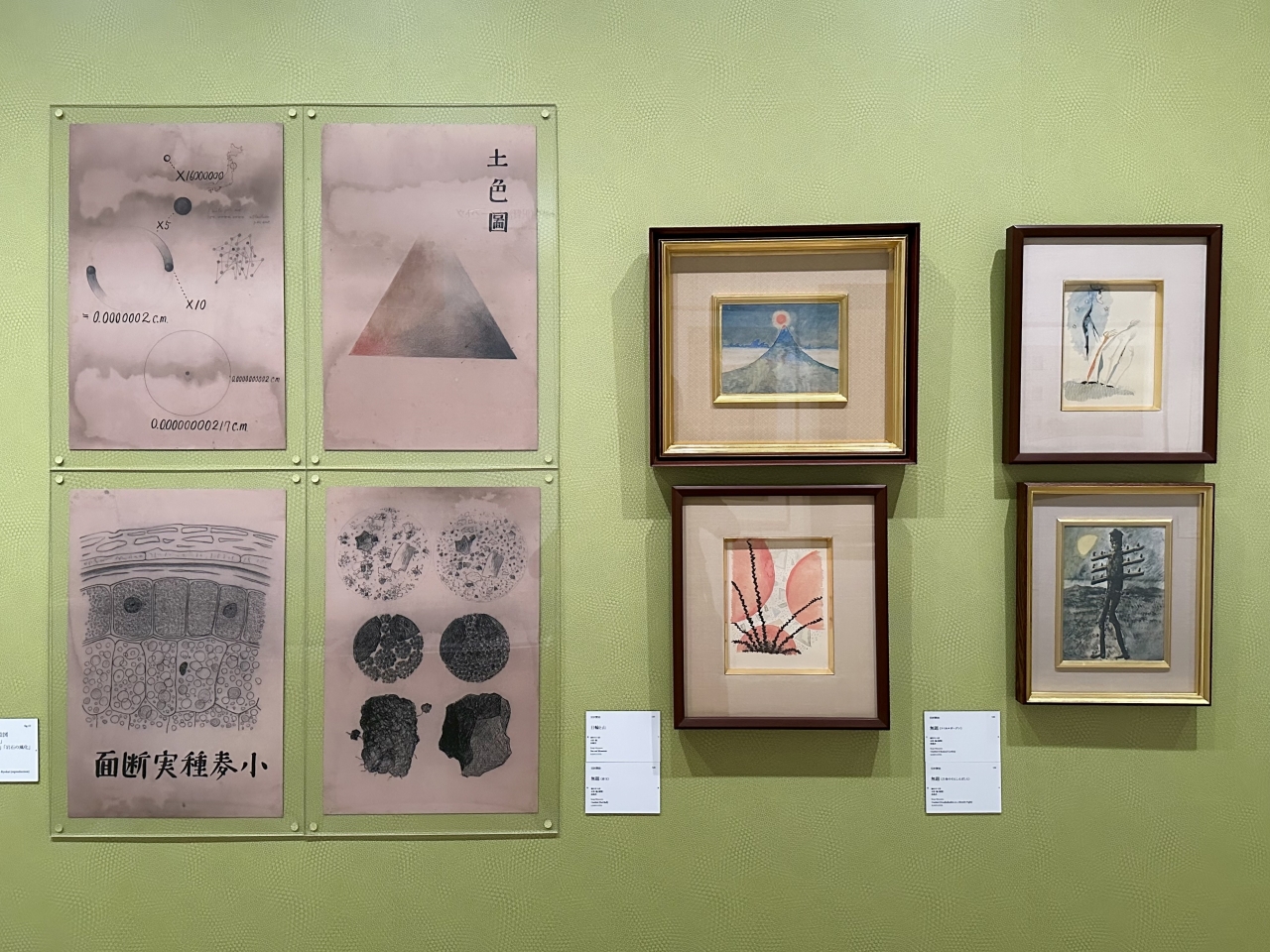
Chapter 4: Exhibition view, an exhibition on Miyazawa Kenji's pictorial expression. *Only "Sun and Mountain," second from the right on the top row, will be on display until February 2nd. Other works will also be exhibited in rotation, with the originals and replicas being displayed.
This chapter's highlights include paintings and drawings by Miyazawa Kenji. While widely known as a children's author, Miyazawa Kenji was not limited to literature; he also sought to realize a "Dreamland" that would bring happiness to people through his broad knowledge and practice in geology, agriculture, religion, and art. His hometown, Hanamaki City, Iwate Prefecture, not only served as a motif for Kenji's children's stories and poems, but also served as a place where he put his agricultural science and artistic theories into practice. In 1926, after retiring from agricultural school, Kenji founded a private school in Hanamaki, the Rasu Jijin Association. The educational illustrations he used when lecturing local farmers on crops and soil, which blend science and art, convey his philosophy of viewing farming life itself as art.
Kenji was also passionate about designing flower beds, stating in his short story "Flower Bed Construction" that "flowers could paint a Beethoven fantasy." For Kenji, flower beds were an element that shaped a better world, and at the same time, designing them was not a peasant art concept, but rather one of the most familiar artistic activities he put into practice in his daily life and work. The exhibition introduces modern flower bed designs, such as "Tearful Eyes," which are preserved in his flower bed blueprint "Memo Flora."
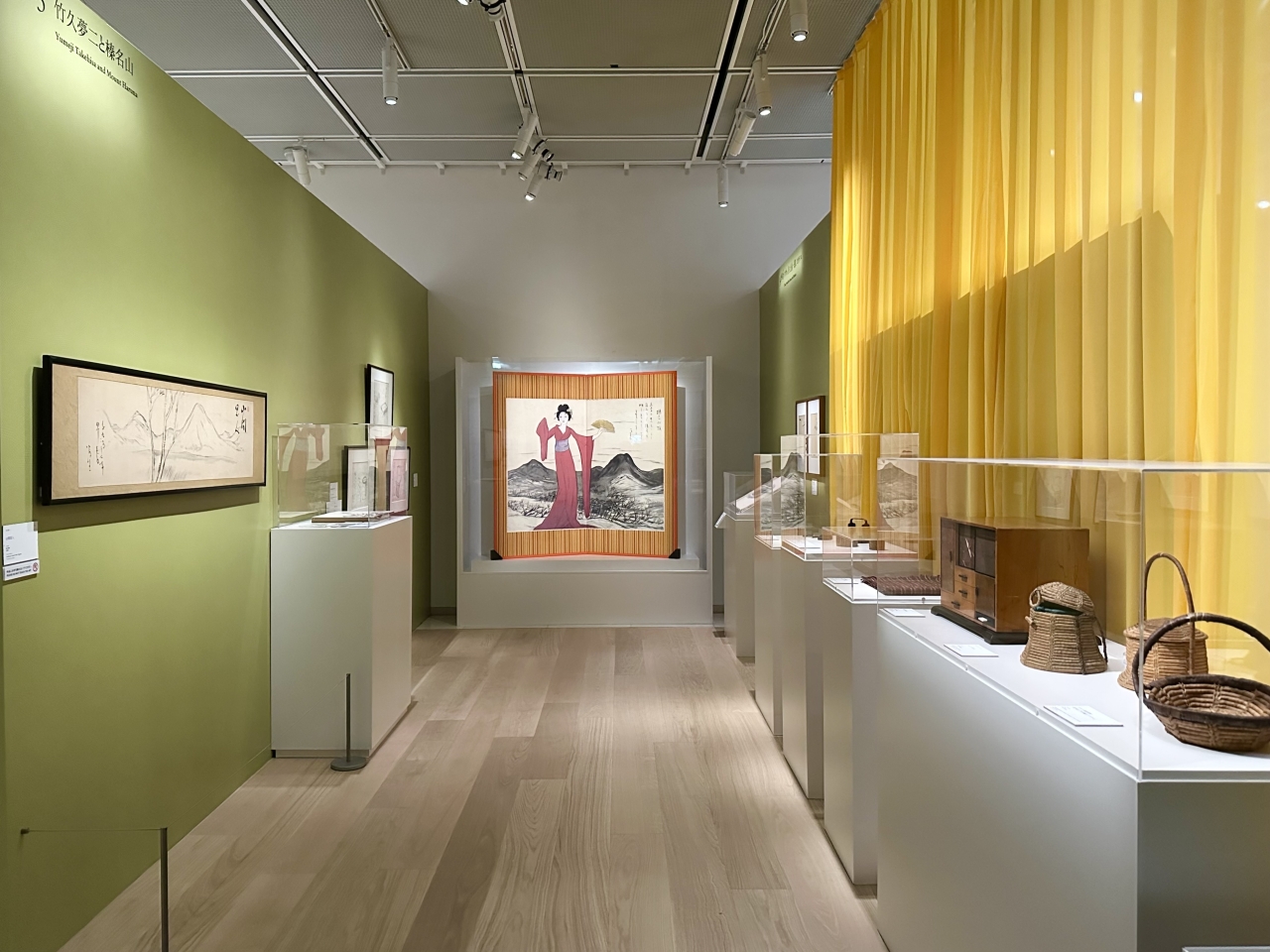
Chapter 4: Exhibition view of materials related to Takehisa Yumeji and Bruno Taut
The final chapter, Chapter 5, "Looking Back/Reviving: The Future of Utopia," focuses on Fusichiro Inoue, a cultural activist who aimed to revitalize Takasaki, Gunma Prefecture, through art and architecture shortly after the war. After working to establish a local symphony orchestra, Inoue commissioned architects Antonin and Noémie Raymond to design the Gunma Music Center. Featuring a reinforced concrete folded-plate structure, the facility's design reflects economy, enduring durability, and democracy, allowing easy viewing from any seat. It is considered a representative example of Japanese modernist architecture, having been selected as one of DOCOMOMO Japan's "Top 20 Modern Japanese Architecture."
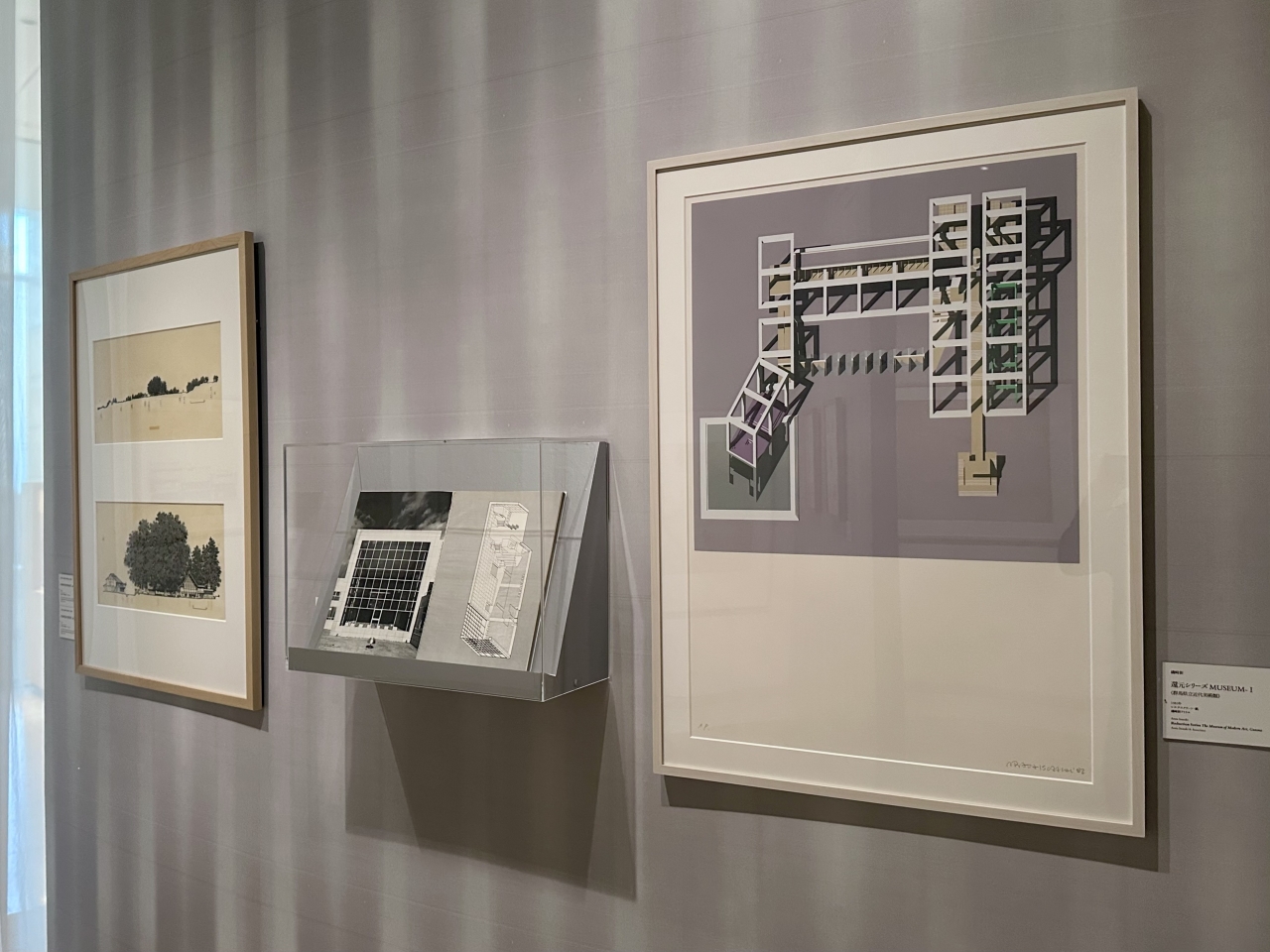
From Chapter 5, the exhibition view, on the right is Arata Isozaki's "Reduction Series MUSEUM-I (Gunma Museum of Modern Art)" 1983, Arata Isozaki Atelier Collection
Furthermore, Inoue hired Arata Isozaki, a cutting-edge architect who had attracted attention at the Osaka Expo, to build the Gunma Museum of Modern Art in 1974. The building's geometric structure is based on a multiplyable cubic frame, and the hollow frame acts as a container for displaying artworks, isolating them from their surrounding context. This "white cube" idea, which has become synonymous with contemporary art spaces, was put into practice at this facility, a world pioneer.
Furthermore, during the period of rapid economic growth, a research method known as a "design survey" became popular in the architectural world. This involved measuring entire traditional townscapes and villages and visualizing them with detailed drawings to create an overall picture of the area.
After taking up his post as professor at Kogakuin University, architectural historian Teiji Ito, a pioneer of design surveys in Japan, instructed students in the creation of surveyed drawings of Unnojuku in Nagano Prefecture. The drawings reveal the architecture, history, and relationship with nature that symbolize each era of Unnojuku, which flourished as a post town on the Hokkoku Kaido road until the Edo period. The students were thoroughly trained under the principle that "beautiful houses must be depicted beautifully," and the delicate line drawings and depictions of trees are a highlight of the work.
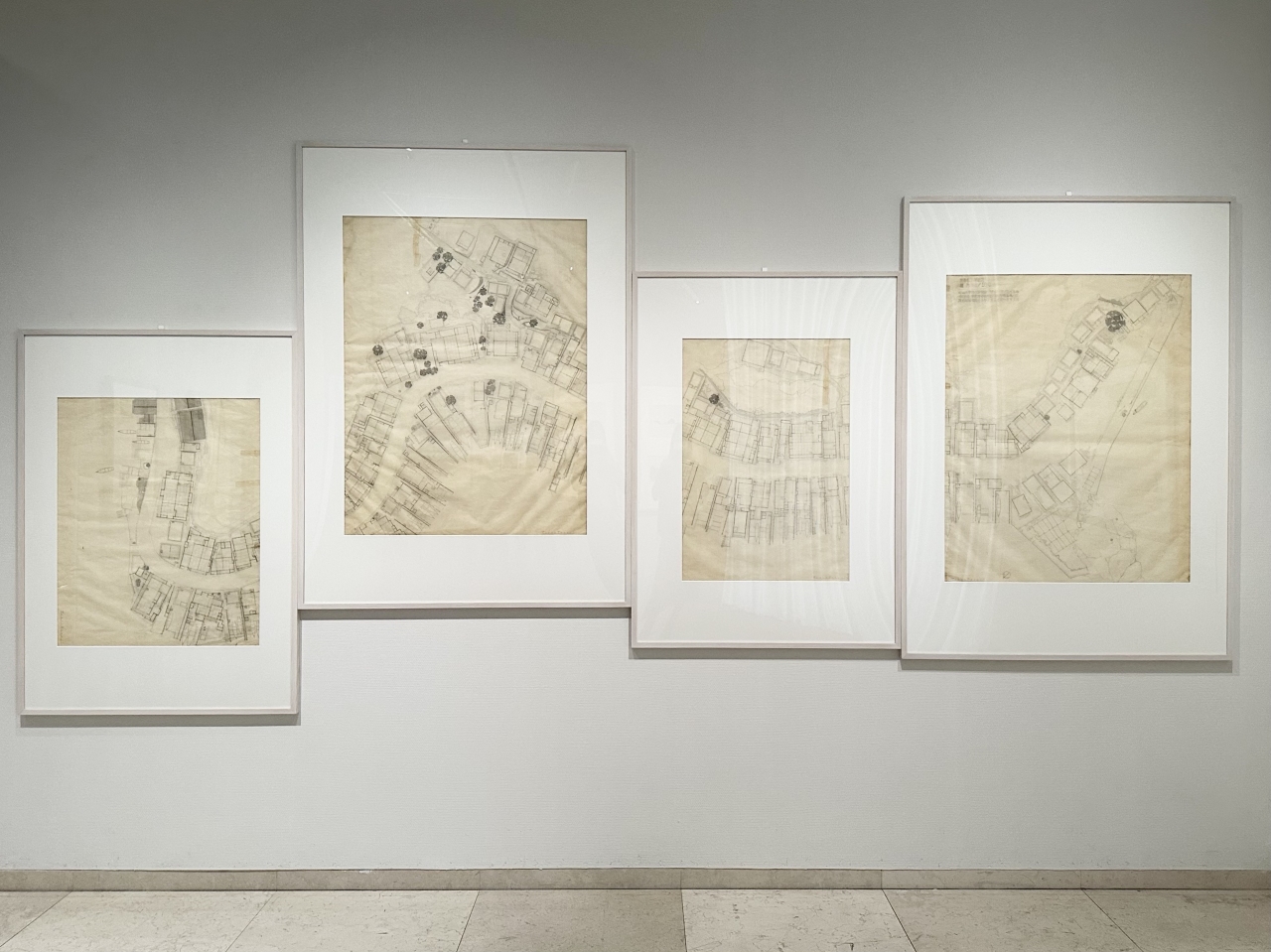
Chapter 5: From the exhibition view, Meiji University Kamiyo Laboratory "Ine Kameyama Design Survey Village Overall Plan (Set of 4)" 1968, Meiji University Faculty of Science and Technology, Department of Architecture, Meiji University Architectural Archives
The particularly large continuous plan was produced by the laboratory of Yuichiro Kamishiro, an architectural historian who taught at Meiji University. He recorded detailed drawings of the unique landscape of boathouses lined along the bay in Ine-Kameyama, Kyoto Prefecture. Furthermore, Kamishiro and his colleagues conducted extensive research on the spaces that emerge during festivals in remote fishing villages such as Megijima and Okinoshima in the Seto Inland Sea, in an attempt to understand the formation and role of local communities.
In this way, the design survey serves as a record of a world that is being lost, while also conveying the sincere attitude of young people who are reexamining the relationship between architecture and community in a changing society and seeking clues for the future.
More than just a historical retrospective, the exhibition "Beautiful Utopia: Portraits of Modern Japanese People Who Dreamed of an Ideal Land" points the way to the "beautiful utopia" we should all strive for. It will run until Sunday, March 22, 2026.
■ Overview of "Beautiful Utopia: Portraits of Modern Japanese People Who Dreamed of an Ideal Land"
| Dates | Thursday, January 15, 2026 – Sunday, March 22, 2026 *Some exhibits will be changed during the exhibition period. First period: January 15th to February 17th, second period: February 19th to March 22nd. *If you re-enter after February 19th, you will receive a 100 yen discount if you present your ticket stub. |
| venue | Panasonic Shiodome Museum of Art (4F Panasonic Tokyo Shiodome Building, 1-5-1 Higashi-Shinbashi, Minato-ku, Tokyo) |
| Closed days | Wednesdays (except February 11th and March 18th) |
| Opening hours | 10:00-18:00 (last entry at 17:30) * Open until 8:00 PM on February 6th (Fri), March 6th (Fri), 20th (Fri), and 21st (Sat). (Last entry at 7:30 PM.) |
| Admission fee | Adults: 1,200 yen / 65 years and older: 1,100 yen / University and high school students: 700 yen / Junior high school students and younger: Free
*Free admission for those who present a disability certificate and up to one accompanying person. |
| Organizer | Panasonic Shiodome Museum of Art |
| Official exhibition page | https://panasonic.co.jp/ew/museum/exhibition/26/260115/ |
*The contents of this article are from the time of the press preview. It may differ from the latest information, so please check the official website for details.

