









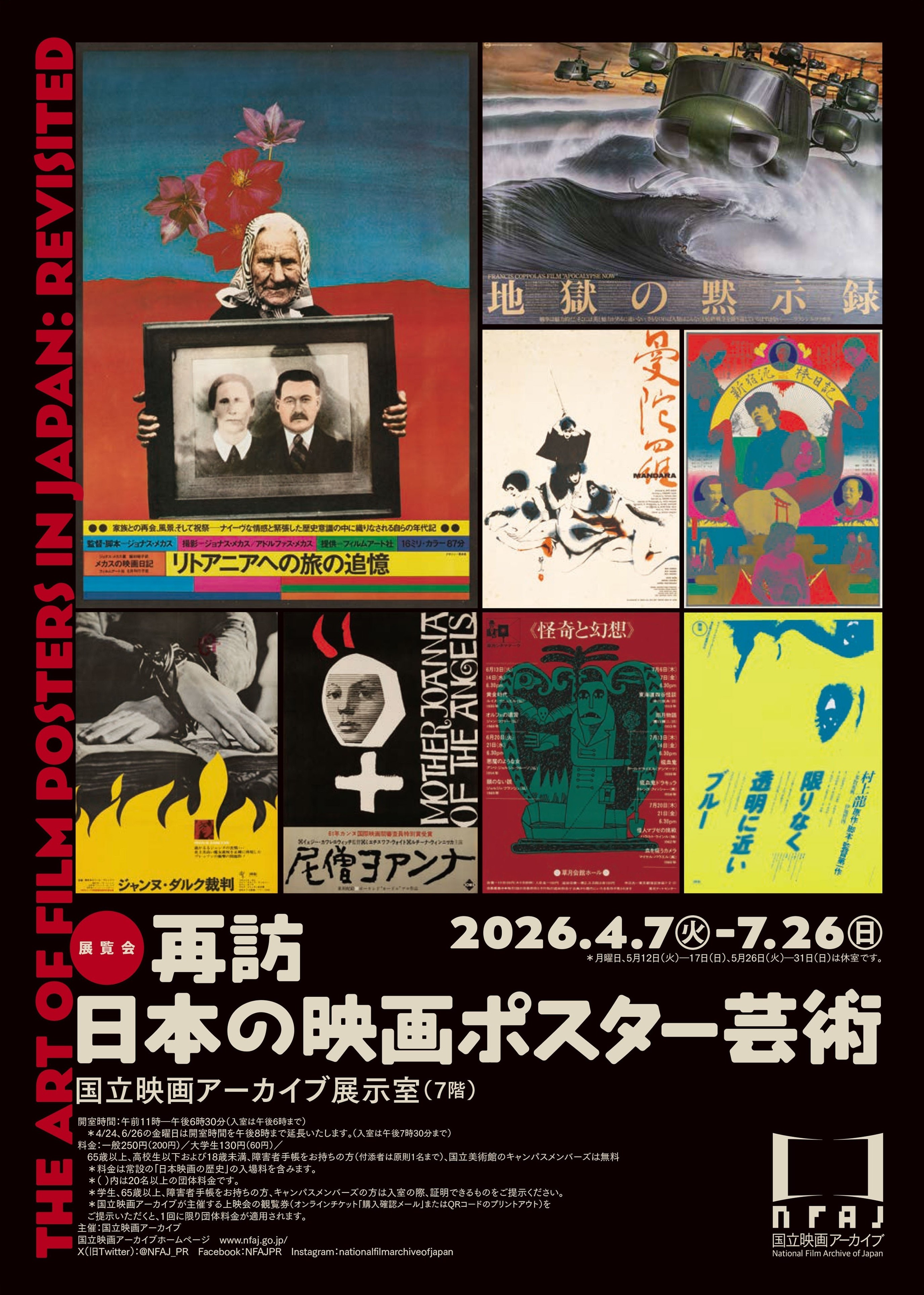
Movie posters, which have been displayed in theaters and on street corners as a promotional medium for films, have mostly been produced anonymously under the control of production and distribution companies in Japan. However, tracing the threads of history reveals posters that transcend this framework and assert their value as independent graphic works.
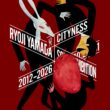
Exhibition flyer
Especially from the 1960s onward, various talents intersected with the film industry. Amidst the entanglement of genres such as film, art, literature, and theater, a new generation of designers such as Kiyoshi Awazu, Tadanori Yokoo, Makoto Wada, and Eiko Ishioka emerged. Furthermore, the establishment of the Art Theatre Guild of Japan (ATG) stimulated designers both inside and outside the industry, leading to a transformation of traditional poster styles in parallel with the innovative movement in film art.
This exhibition is based on the "Japanese Film Poster Art" exhibition hosted by our museum in 2012, and includes new acquisitions since then. Through more than 90 posters mainly produced from the 1960s to the 1980s, it explores the intersection of film and graphic art. You will find some that brilliantly capture the emotions of the films, as well as some that will surprise you with their unexpectedness. Enjoy this other "face" of film art that blossomed outside the screen.
Movie posters are also graphic arts
Fourteen years have passed since the "Japanese Film Poster Art" exhibition, which challenged the conventional view of "film posters" as merely a popular promotional tool for new films and explored film posters as works of art that are not anonymous. Now, the exhibition is revived with enhanced features, focusing on the period from the 1960s onward, a time of innovation for Japanese graphic design, and including newly acquired works by Kiyoshi Awazu, Tadanori Yokoo, and Makoto Wada.
Exhibition structure
Chapter 1: "Drawing" Movie Posters — Post-War Era
The film industry, which achieved post-war recovery as an entertainment industry, initially sought "easy-to-understand" posters based on the star system. However, even within this context, there was a group of artists, such as Hisamitsu Noguchi and Shigemi Hijikata, who deeply understood the virtues of film and attempted to capture them in a painterly style.
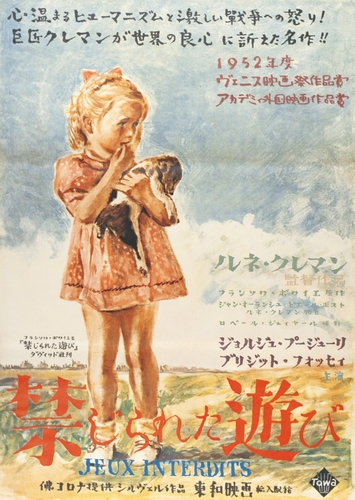
Hisamitsu Noguchi's "Forbidden Games" (1953 / France / Directed by Rene Clement)
National Film Archive
Chapter 2: A New Generation of Designers – The 1960s
A new generation of graphic designers, including Kiyoshi Awazu, Tadanori Yokoo, and Makoto Wada, who began their careers around 1960, developed a strong interest in film. Although the barriers of the film industry were high, they began to explore their relationship with art films with free thinking and techniques that were not bound by the industry's design conventions.
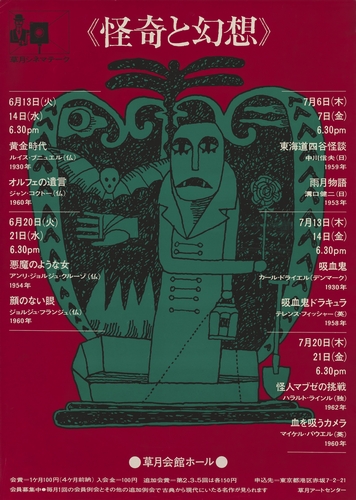
Makoto Wada "Sogetsu Cinematheque 'Mystery and Fantasy'" (1967)
National Film Archive
Chapter 3: The Impact of ATG (Art Theatre Guild of Japan)
In 1962, the Japan Art Theatre Guild (ATG), specializing in the distribution of foreign art films, began its activities, and anonymous industry designers brought unconventional expressions to posters. When ATG ventured into low-budget Japanese film production in 1967, this free expression accelerated even further.
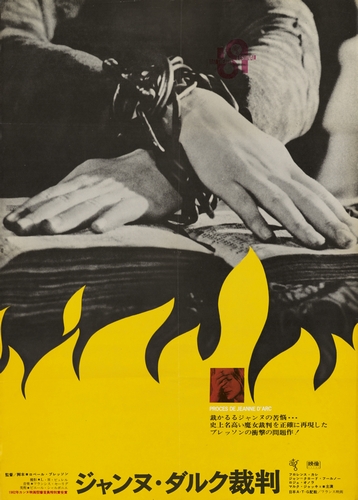
Higaki Kiroku "The Trial of Joan of Arc"
(1969 / France / Directed by Robert Bresson)
National Film Archive Collection
Chapter 4: Designers/artists who took on film
The new trends in film artwork spread beyond ATG. From the 1970s onward, many designers, illustrators, and cartoonists who shaped the landscape of the era were invited to create film posters, working closely with the films themselves.
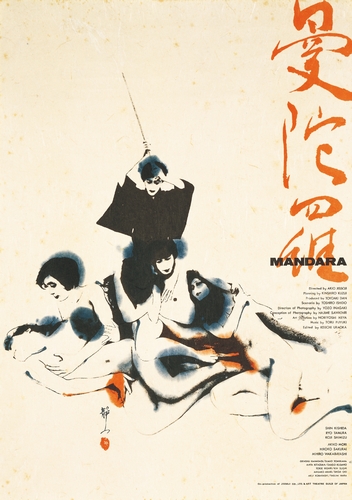
Seiichi Hayashi “Mandala”
(1971 / Japan / Directed by Akio Jissoji)
National Film Archive
Talk event
We will be holding gallery talks with invited guests and explanations of the exhibits by our museum researchers.
*Details of each event will be announced later on our website and other platforms.
Exhibit Commentary: Reading Posters from Film <br /> Dates: Saturday, May 23, 2026 and Saturday, July 18, 2026
Lecturer: Hidenori Okada (Chief Researcher, NDL)
Location: Exhibition room (7th floor)
The Era of Film Posters Through Paintings: Hisamitsu Noguchi and Shigemi Hijikata <br />Date: Saturday, June 6, 2026
Lecturer: Ryuichiro Nemoto (Representative of the NPO Association for Preserving the Good Old Culture)
Location: Exhibition lobby (7th floor)
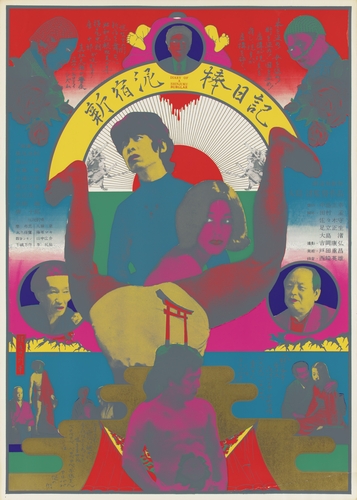
Tadanori Yokoo's "Diary of a Shinjuku Thief"
(1968/Japan/Directed by Nagisa Oshima) National Film Archive of Japan
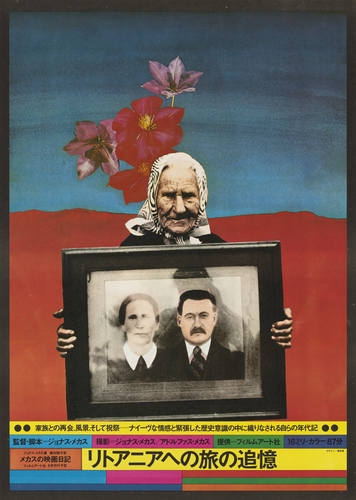
Awazu Kiyoshi, "Memories of a Journey to Lithuania"
(1973 / USA / Directed by Jonas Mekas) Held in the collection of the National Film Archive of Japan.
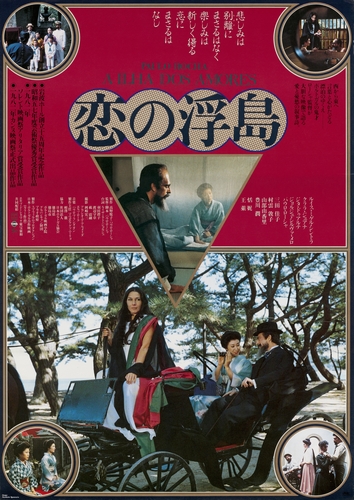
Masakatsu Ogasawara's "Floating Island of Love"
(1983 / Portugal/Japan / Directed by Paulo Rocha) National Film Archive of Japan
Event Overview
Project Title: Revisiting the Art of Japanese Movie Posters
(English title / The Art of Film Posters in Japan: Revisited)
Organized by : National Film Archive
Date: April 7th [Tuesday] – July 26th [Sunday], 2026
Closed days : Mondays, May 12th (Tue) – 17th (Sun), May 26th (Tue) – 31st (Sun)
Opening hours : 11:00 AM – 6:30 PM (entry until 6:00 PM)
*Opening hours will be extended until 8:00 PM on Fridays, April 24th and June 26th. (Entry until 7:30 PM)
Venue: National Film Archive Exhibition Room (7th floor )
Access : Get off at Kyobashi Station on the Tokyo Metro Ginza Line, and walk for 1 minute from Exit 1 towards Showa-dori. Get off at Takaracho Station on the Toei Subway Asakusa Line, and walk for 1 minute from Exit A4 towards Chuo-dori. Get off at Ginza-itchome Station on the Tokyo Metro Yurakucho Line, and walk for 5 minutes from Exit 7.
Get off at JR Tokyo Station, 10-minute walk from Yaesu South Exit.
Admission fees : General admission 250 yen (200 yen) / University students 130 yen (60 yen) / Free for those 65 years and older, high school students and younger, those under 18, holders of disability certificates (one accompanying person allowed in principle), and National Film Archive Campus Members. *Admission fee includes admission to the permanent exhibition "History of Japanese Cinema".
* (Prices in parentheses are for groups of 20 or more.)
*Students, those aged 65 and over, holders of disability certificates, and Campus Members are required to present proof of eligibility upon entry.
*Presenting your ticket for a screening hosted by the National Film Archive (online ticket "purchase confirmation email" or printout of the QR code) will entitle you to a group rate for one time only.
For inquiries : 050-5541-8600 (Hello Dial)
HP : https://www.nfaj.go.jp/exhibition/posterjapan2026/
[Agency for Cultural Affairs] Press Release
<Past related articles>
[National Film Archive] Announcement of the exhibition "Film Director Andrzej Wajda"