












Seiko Group Corporation will reopen the "SEIKO HOUSE Hall" on the 6th floor of SEIKO HOUSE, a landmark in Ginza, as a new cultural hub on Thursday, August 27th.
(c) New Material Research Laboratory_Shinsoken
Since its completion in 1932 as Hattori Watch Shop, SEIKO HOUSE has watched over the passage of time in Ginza. While inheriting the history and dignity of its architecture, it will be reborn with a new look, fusing Japanese aesthetics with the pioneering spirit of Ginza. While enhancing its functionality for exhibitions and events, it will begin its journey as a space where one can feel the passage and value of "time" and touch upon stories of culture and creativity.
In addition, to commemorate the reopening, Wako will host the "Gimel Exhibition" as the inaugural exhibition, starting on Thursday, August 27th.
The Seiko Group, centered on creating value related to "time" that it has cultivated since its founding, develops a diverse range of businesses, including its watch business. At the Ginza SEIKO HOUSE Hall, we will continue to work on creating new value through supporting and disseminating cultural and artistic activities.
(c) New Material Research Laboratory_Shinsoken
A new exhibition space created by light and materials
The interior design was handled by Shinzosozai Kenkyujo, the same company that designed the interior of "Arts and Culture," the basement sales area of Wako, which operates as SEIKO HOUSE.
Spatial concept
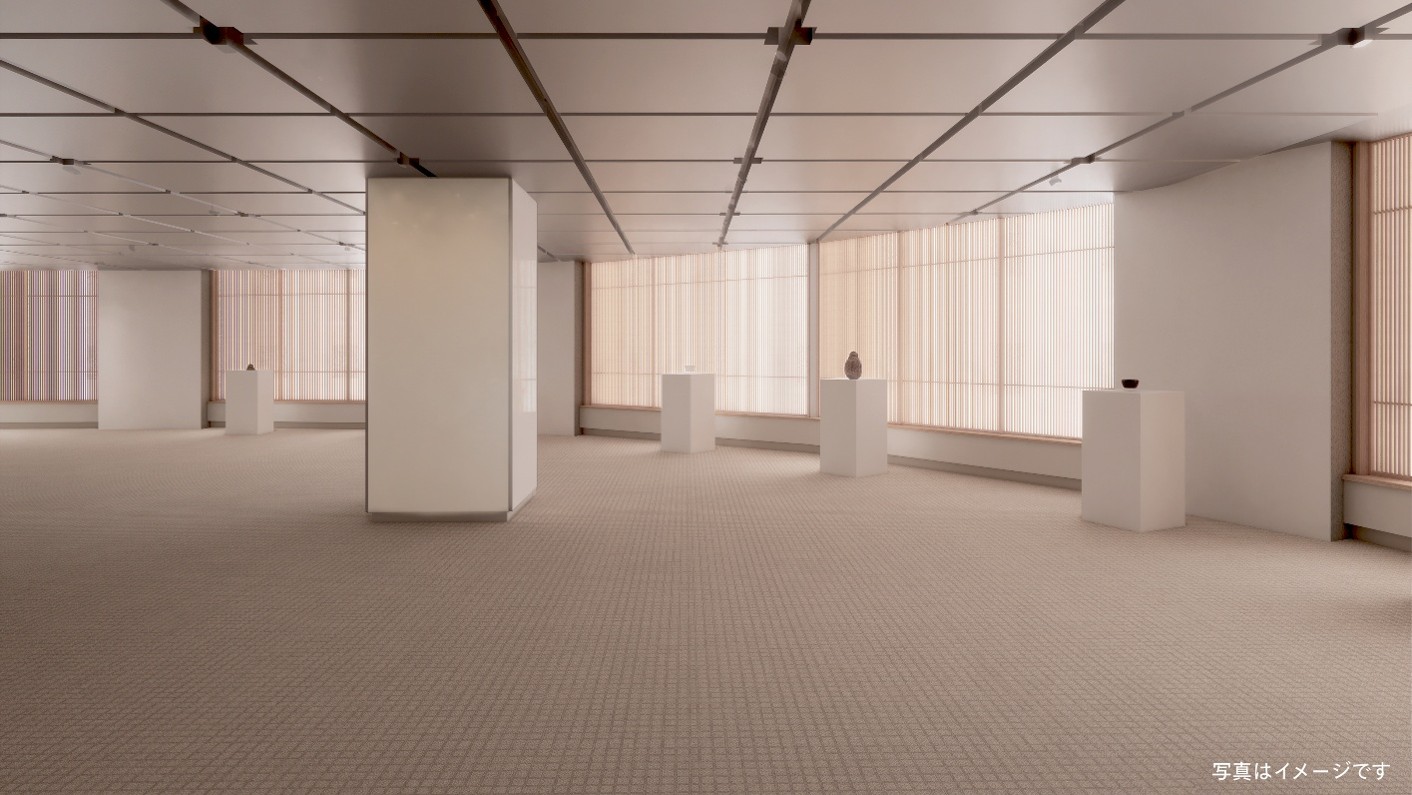
While the basement is a "stage of time" with a clock-like fixture in the center, the 6th-floor exhibition gallery is designed as a "stage of light" that corresponds to it.
By reorganizing and rearranging the storage functions and opening up the space to transform it into an exhibition gallery, the space has been reborn into one where the presence of windows can be consciously appreciated from within. By restoring the inherent openness of the architecture, the structure allows the building and the interior space to respond to and interact with each other.
New shoji screens have been installed on the windows to softly guide the ever-changing natural light into the room, while also allowing for flexible adjustment of the lighting environment according to the exhibits and events. The light, which changes with the time of day and season, brings a quiet shift in expression to the exhibition space, further enriching the spatial concept of a "stage of light."
The floor is covered with a hand-tufted carpet made of undyed wool by Yamagata Dantsu. The delicate texture and warmth unique to natural materials envelop the entire space, and in harmony with the soft natural light filtering in through the shoji screens, it creates a calm and profound exhibition environment.
The basement floor represents "time," and the sixth floor represents "light." While these two themes exist in separate spaces, they are quietly connected by the continuity of materials, light, and experiences. We aimed to create a serene and dignified exhibition space where visitors can engage with the artworks while feeling the passage of time and the changing seasons amidst the rich expressions woven by the ever-shifting natural light and materials.
(New Materials Research Institute)
New Materials Research Institute Profile
An architectural design firm established in 2008 by contemporary artist Hiroshi Sugimoto and architect Tomoyuki Sakakida.
Contrary to its name, the firm studies materials and techniques used in ancient, medieval, and early modern times, and works to reinterpret and revive them in the modern era. It preserves techniques that are in danger of being forgotten amidst modernization and further refines those techniques. It challenges the standardization and superficiality of modern building materials, insisting on traditional materials that are difficult to handle and require advanced craftsmanship. It believes that creating architecture using old materials, while avoiding the trends of the times, is the most innovative approach today, and is working on this in its designs.
*The correct spelling of "Sakakida" uses the radical for "tree" followed by the character for "god".
SEIKO HOUSE Hall Overview
・Name: SEIKO HOUSE Hall
・Location: 6th floor, SEIKO HOUSE, 4-5-11 Ginza, Chuo-ku, Tokyo ・Area: Approximately 281.8㎡ (85.3 tsubo)
• Design: Shinzosozai Kenkyujo (New Material Research Institute) • Construction: Shimizu Corporation • Renewal Opening Date: August 27, 2026 (Thursday)
Overview of the special exhibition commemorating the reopening
• Event Name: Gimel Exhibition – A Hundred Flowers in Full Bloom –
• Organizer: Wako Co., Ltd. • Dates: August 27 (Thu) – September 6 (Sun), 2026, 11:00 – 19:00
(Open until 6:00 PM on Monday the 31st, and until 5:00 PM on the final day)
・Content: This special exhibition, themed "A Hundred Flowers in Full Bloom," brings together approximately 400 colorful pieces of jewelry inspired by various flowers that bloom throughout the four seasons. Visitors can enjoy the world of "Gimel," a brand that Japan is proud of.
[Seiko Group Corporation] Press Release
<Related articles from the past>
Seiko Museum Ginza will hold a special exhibition for the summer holidays of 2026: "Learn about the history of clocks and make clocks that utilize the power of nature!"